
Tell People What, Not How
Your crew already knows who's good at what. Stop deciding it for them.
It was summer up on the north slope of Alaska, and a drilling rig I was working with was shut down for 3 weeks for a major retrofit.
New diesel engines, control systems and a hundred other smaller jobs were scheduled. A big job.
Everything started off well, crew was on hand, equipment had arrived but 1.5 weeks in the rig manager, and my main coaching client Stu, realised he was 1.5 weeks behind. This came up in one of our coaching sessions. Stu was frantic because each day the rig was not at work cost $150,000 in lost revenue. 1.5 weeks late would be $1.5 million out the door.
The question Stu needed to figure out was how to get his team to finish the remaining 50 tasks before the rig needed to come back on line.
I used the GROW framework, what's your goal, reality (what's going on), options (what can you do) and way forward (action items). To help Stu deal with this situation.
What Stu came up with was brilliant. Instead of him trying to re-work the schedule Stu decided to tell the crew the truth. The fact that they were 1.5 weeks behind.
And then Stu did the action that most rig managers can't bring themselves to do. He didn't grab the schedule and start re-cutting it. He stopped and thought. Then he told the crew what had to happen, by when, and left how it happened to them.
Phil Knight tells the same idea in Shoe Dog, borrowed from General Patton: tell people what to do, not how to do it, and let them surprise you with the results. He ran the early Nike company that way. Stu ran a rig retrofit that way.
OK, so what?
And you're probably thinking if Stu doesn't tell them what to do safety could be impacted or they won't know when to do certain things. Here's what Stu did.
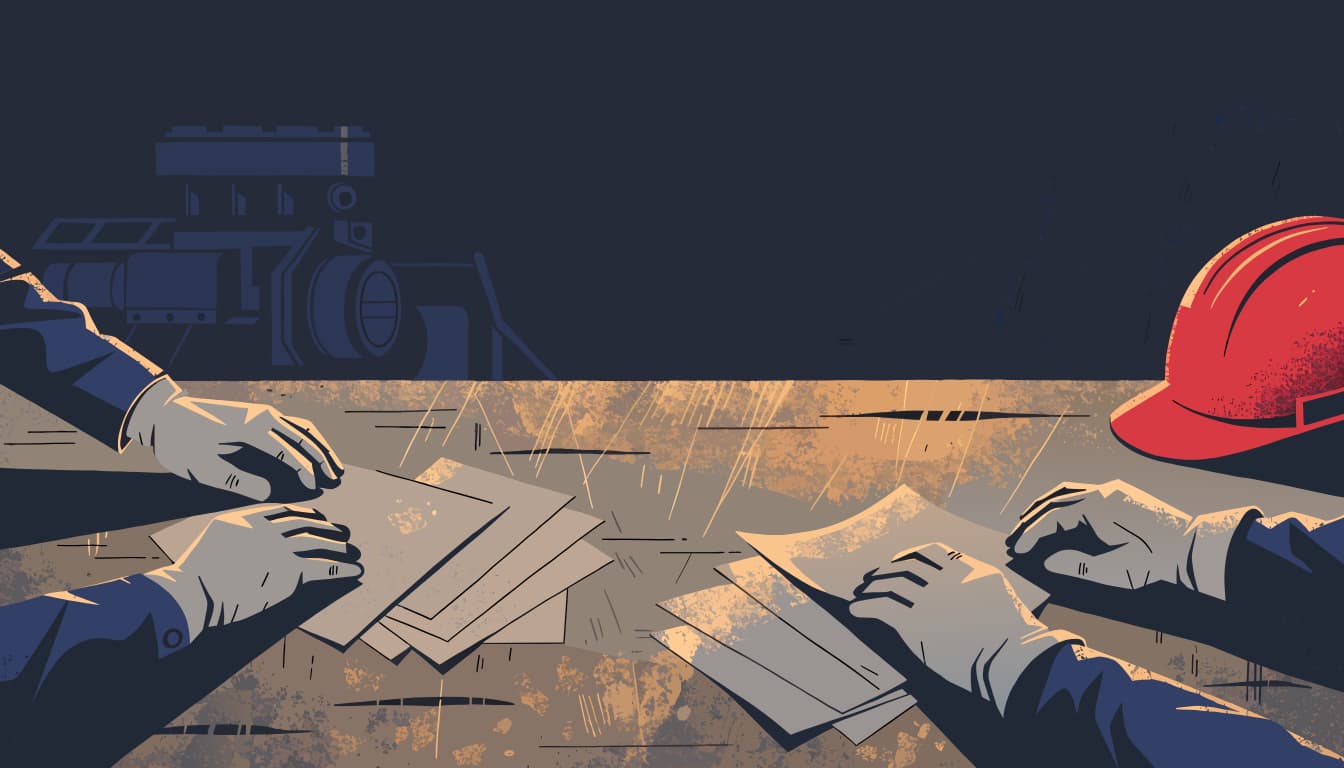
The part that mattered is Stu put all the work orders on a table and said "I don't care who does what but there are 50 work orders here that need to be done in the next 10 days. You guys pick which ones you want to do and get it done."
The crew members looked at each other for a few seconds, then they descended passionately on the work order pile and started going through the tasks. For example one crew member, Jim, grabbed a task like cleaning the mud reservoir and then said to George, another crew member, why don't you take this one George, that's always been your expertise. George said "sure, if you take grinding the railings." Jim said OK. This horse trading went on until all the tasks were divided up. It took about 15 minutes. Then the crew got to work.
They also reminded each other that safety was important and it was the first thing they had to consider when starting a task. For example they monitored themselves and did a JSA before each work order. Like calling out that a work order with heavy equipment required a two-man lift.
The result, the crew got all the tasks done in 9 days, 1 day earlier than what the rig was scheduled to move to a drill site. Instead of losing ten days, the rig picked up one. Instead of $1.5 million out the door, $150,000 in early. And no safety incidents.
Instead of Stu trying to figure out who was best at what, he simply told the crew and let them work it out. The crew members each knew their capabilities. Not only that, they made the decision to get it done. Not their boss Stu. So it became a matter of personal pride to get it done. They were just doing what they told Stu they would do. Not Stu telling them what they should do.
If you own a shop in the $5M–$100M range and you're still the one deciding who does what by when on a shutdown, a rush order, or a capital project, you're the bottleneck Stu almost was. Your people know who's good at the mud reservoir. They've known for years.
Tell them what. Let them surprise you.
One next step: Pick one job this week you'd normally hand out by name. Put it in front of the crew with the deadline and the constraints, and walk away. See who takes it.
Further reading:
- Shoe Dog — Phil Knight (Scribner, 2016). Where the "tell them what, not how" line lives — Knight credits it to Patton.
- Turn the Ship Around! — L. David Marquet (Portfolio/Penguin, 2012). A nuclear sub captain stops giving orders and the crew runs the boat. Same move as Stu's work-order table, with a navy's worth of consequences.
- Drive — Daniel H. Pink (Riverhead Books, 2009). Why the crew worked harder for their own decision than they ever would have for Stu's — autonomy is the lever.