
Culture Isn't a Slogan - Lessons from the Factory Floor
Why slogans don't create culture - and what does
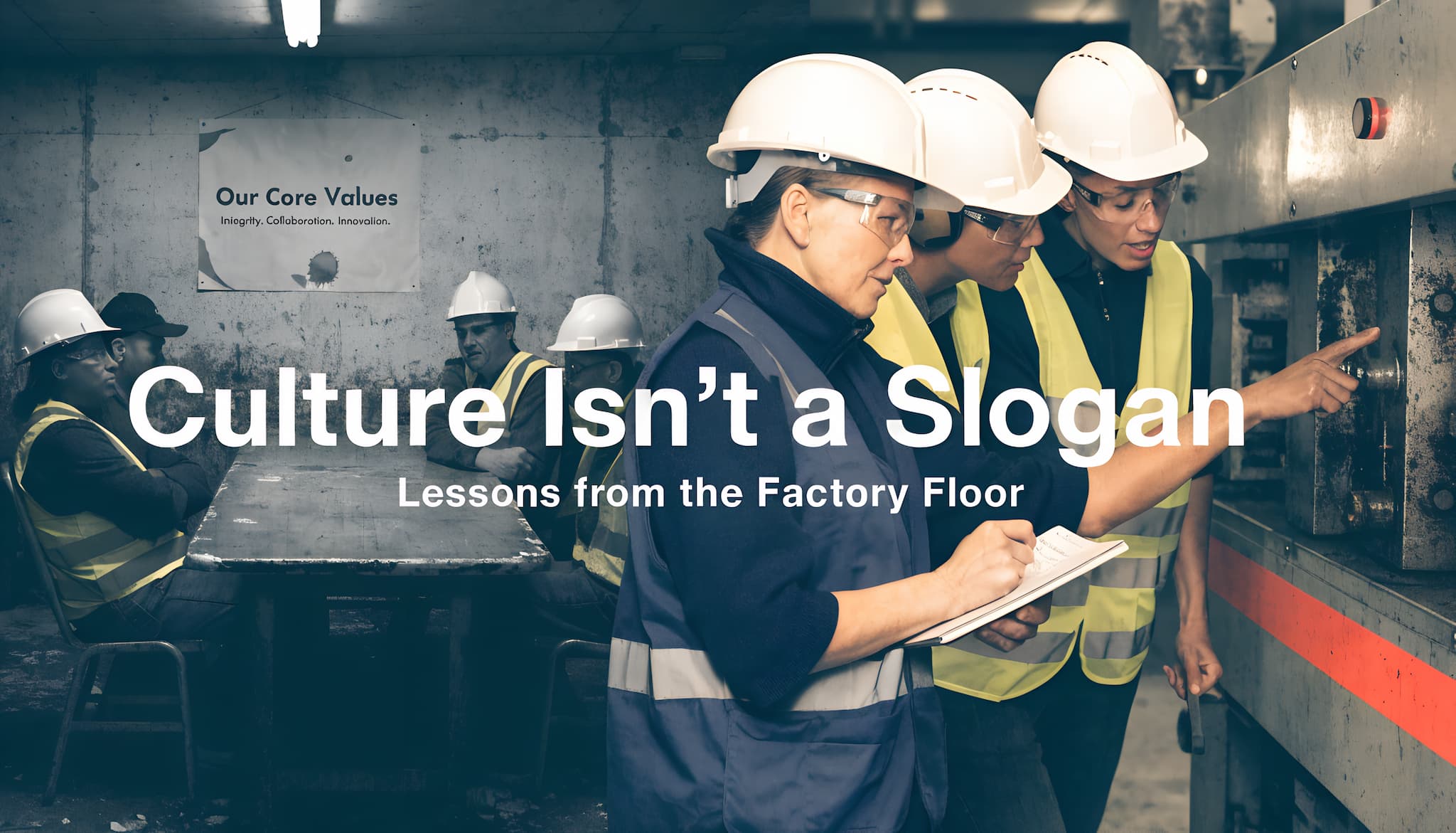
When I first started U-Flow, a speciality manufacturing company, culture was honestly an afterthought. I was laser-focused on designing a great product and landing those first few critical orders. As we grew and added people, I knew I needed to be more intentional about culture, but I wasn't quite sure how to go about it.
I tried a lot of the standard advice you read about. We did the off-site to define our values. We formed a "culture committee". We wrote inspirational paragraphs about innovation and teamwork. But it all felt a bit hollow - like words on a wall that didn't really change how we operated.
The turning point came when I realised that culture isn't about slogans - it's about behaviours. It's the living, breathing embodiment of our priorities and principles, not just in the good times, but especially in the tough moments.
I knew I needed to make it real and relatable for my team. So I landed on a single, simple phrase: "Do what you think is right."
It wasn't a traditional corporate values statement by any means. But it resonated because it was actionable and applicable to the everyday choices we faced on the manufacturing floor. When an employee was wrestling with a quality issue or a difficult customer request, "Do what you think is right" became a guiding touchstone.
But here's the key - it had to start with me, the leader. I had to model what "right" looked like, even when it was hard. If I preached quality but cut corners to meet a deadline, my actions would undermine the culture. If I talked up employee empowerment but micromanaged every decision, the dissonance would breed cynicism.
Building a meaningful manufacturing culture comes down to two things:
- Embody the principles you want to see, especially when it's tough. Your team is always watching how you navigate the hard calls.
- Make it simple and repeat it constantly. Distil your culture down to an memorable, actionable statement and reinforce it at every opportunity. "Do what you think is right" worked because it was easy to understand and apply.
Here's the truth: You can't outsource culture to a committee or a consultant. It has to come from you. Your everyday actions as a leader, multiplied by consistency over time, are what ultimately shape your company's culture.
So my challenge to you is this:
- Audit your own leadership behaviour. The next time you face a difficult decision, ask if you're embodying the culture you want to build. Are you making the right long-term call, even if it's painful in the short-term?
- Pick your rallying cry. What's the simple, memorable rule of thumb you want guiding your team's actions? Maybe it's "Always do right by the customer," "Quality is everyone's job," or "If you see something, say something." The specific phrase matters less than its stickiness and your commitment to living it.
- Make it a mantra. Look for opportunities to highlight and celebrate when team members put that core principle into action. Bonus points for sharing those stories widely. Repetition is key to making it your default mode.
Remember, your manufacturing culture is a lagging indicator of your leadership. The slogans on the wall are just decoration - it's the hard calls you make on the factory floor, day in and day out, that define who you really are as an organization. Make those actions count.
Further Reading:
- "The Culture Code: The Secrets of Highly Successful Groups" by Daniel Coyle (2018) This book dives into the key skills that generate cohesion and cooperation within successful organizations. Coyle offers practical tips for building better teams and a stronger culture, backed by compelling real-world stories.
- "Leaders Eat Last: Why Some Teams Pull Together and Others Don't" by Simon Sinek (2014) Sinek explores the crucial role of leadership in creating an environment where people feel safe and are naturally motivated to cooperate. He emphasizes the importance of a leader's character and actions in shaping organizational culture.