
Stop Sending Decks. Go Talk to Your Customers.
The 50% growth didn't come from a better slide.
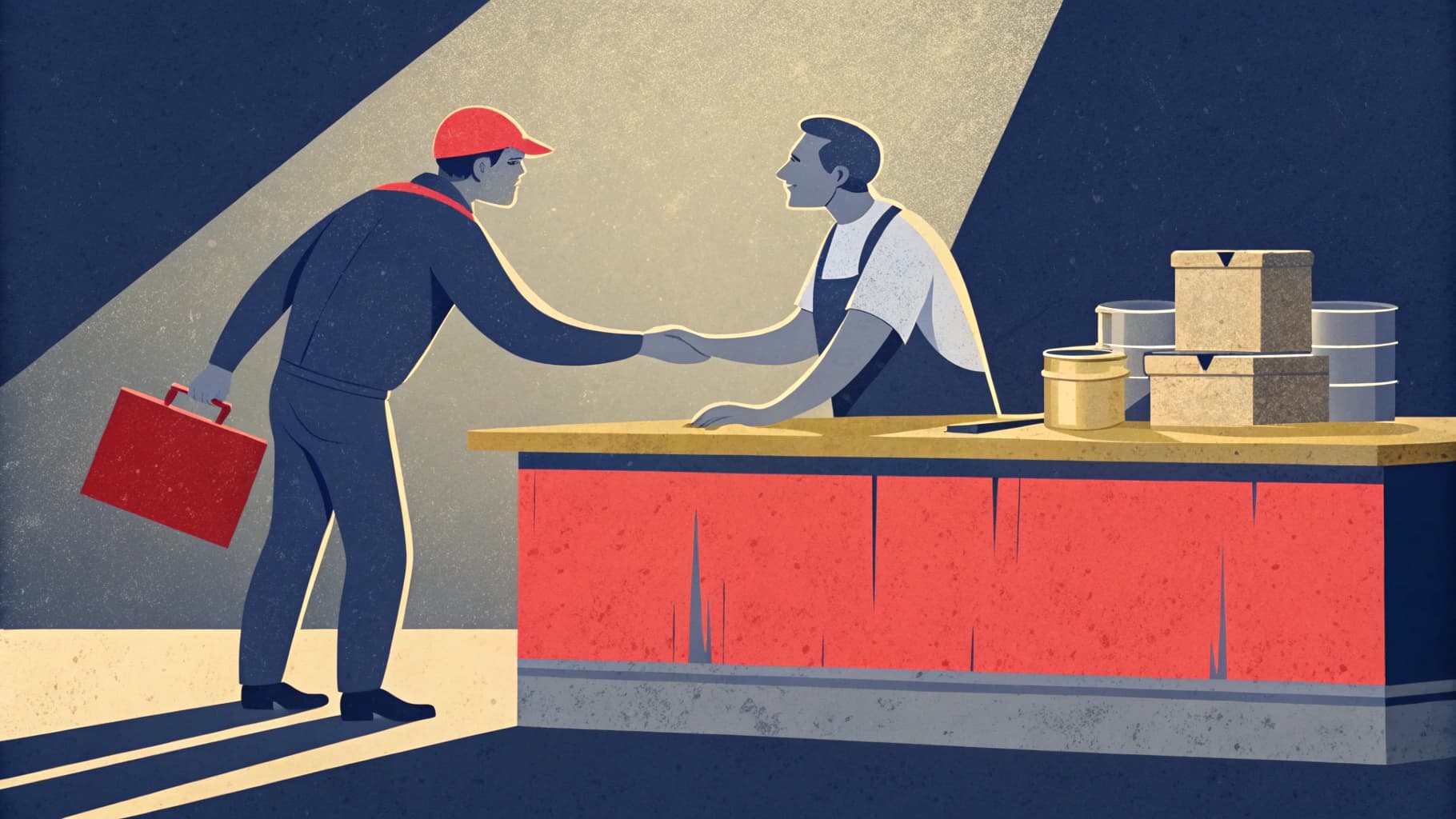
Paint sales were stalling.
Not for lack of effort. The company had decks — competitive analysis, selling techniques, product positioning. All of it rolled out with the kind of fanfare that signals senior leadership is paying attention.
Nothing moved. Nothing changed.
I came in to find out why.
First thing I did: get the VPs and the product manager out of the room.
Not because they were wrong. Because their presence was making everyone else quiet. When the deck comes from corporate and the VP is sitting in the room, your frontline salesperson doesn't ask whether the deck is actually useful. They ask how to apply it better.
I started asking open-ended questions instead. No wrong answers. "That's great, what else?"
What does success look like to you? What do you know now that you didn't six months ago? What are your customers actually saying?
One question landed differently than the rest: "Who are your customers?"
The sales team knew them from reports. Names. Revenue numbers. Purchase history. The kind of data you can put in a spreadsheet and present upstairs.
I pushed: "How could you find out more about them?"
One person said: "Why don't I just hang out where they buy their paint?"
That was the answer.
One salesperson spent time at local paint shops — watching, talking, finding out who was buying, and why, and from whom.
The results: the team learned which customers they were losing and why. They met new customers they hadn't known existed. They mapped what competitors were doing at the point of sale. Armed with that, they built individual plans for each customer — meeting customer needs, not company targets.
Paint sales up 50% year over year.
I was reading Paul Graham's "Do Things That Don't Scale" when this story came back to me. Graham wrote it for tech startups, but the principle translates directly. His point: the work that looks inefficient — going out, talking to people, building relationships one at a time — is often the highest-leverage thing you can do. Founders resist it because it feels too small. Operators resist it for the same reason. Reports feel like scale. Conversations feel like inefficiency.
They're not. The conversation is the work.
You're probably thinking: we already have customer data. We track purchases, debrief after sales calls, run surveys. We know our customers.
You know their numbers. That's different.
Numbers tell you what happened. Conversations tell you what's happening. The salesperson at the paint shop didn't find a trend in a spreadsheet. They found a person — and then found out what that person actually cared about.
There's another version of this objection: "I can't afford to send my reps out to paint shops."
I'd flip that. You can't afford not to. Every deck you build without that ground-level insight is a guess. Some guesses are expensive.
Get your people out of the building.
Not to pitch. To listen. Ask the same open-ended questions that unlocked that room: What do you know now? What are customers telling you? Where are you winning, where are you losing, and why?
Then get the VPs out of the room when they report back.
Not because leadership is the enemy. Because hierarchy compresses information. The person who knows the answer is rarely the one with the title. They're the one who spent a Tuesday afternoon at a paint counter, watching which competitor's product the contractor reached for first.
The deck version of that insight doesn't exist. You have to go get it.
Graham's point about unscalable work applies here too: doing the manual, relationship-first work isn't a concession to early-stage constraints. It's a discipline. The companies that stay connected to their customers at $50M are the ones whose people never stopped going to the paint shop.
Your customers have the information you need. Stop sending decks and go ask them for it.
One next step: Pick one customer your team knows mainly from reports. Have someone — not a VP, ideally the frontline rep — set up an informal visit this week. No agenda, no pitch. One question: "What's the biggest challenge you're dealing with right now?" Come back and share what you hear.
Further reading:
- The Mom Test — Rob Fitzpatrick (Createspace Independent Publishing, 2013). The definitive short guide to customer conversations that yield actual truth — not the polite answers people give when they don't want to hurt your feelings. Applies directly to any sales or discovery conversation.
- Humble Inquiry — Edgar H. Schein (Berrett-Koehler Publishers, 2013). On the discipline of asking instead of telling — and why hierarchical environments make honest dialogue harder than most leaders assume.
- Multipliers — Liz Wiseman (HarperBusiness, 2010). On why some leaders amplify the intelligence of the people around them while others inadvertently suppress it. The VP-out-of-the-room move is in here, in different language.