
Am I Good or Am I Bad? Read Trends, Not Days
Ever been in a situation where something went bad?
Of course you have.
Everyone has. As I often say, "you are special but not unique." In other words, we are all special, but these situations happen all the time to everyone.
I once worked for a company where someone was always waiting to get you. I wrote about this before. The "staging" area — a notoriously slow, bottlenecked part of the operation — got cleared early under my watch. Not by accident. By focused effort. We had pushed hard, made the right calls, and the work was done ahead of schedule.
I walked into the office expecting, at minimum, a nod. Maybe a "nice job."
Instead, I got Brenda. She booed me. Out loud. In front of people. Then — because that wasn't enough — she piled on the guilt. The implication was clear: if I'd finished early, I must have cut corners, or someone else must be picking up slack, or I was making others look bad.
I remember standing there thinking: I just delivered exactly what you've been asking for, and this is the response? Not because Brenda was unusually mean — she wasn't. She was a product of the culture.
Mistakes need to be addressed, but it's how you handle them. In this case I came out of the office depressed and feeling bad about myself. This eats away at your confidence, and performance often falls.
Contrast this to baseball.
A pitcher throws the ball in the wrong spot and the batter hits a home run. He wasn't intending to do that. He just made a mistake. When that happens you don't see the manager running out of the dugout screaming at the pitcher for throwing a bad pitch. No. If you look in the dugout the manager is always stoic. Probably making a mental note to go over the game with an after action review (AAR), but nothing in the moment.
I like Toronto Blue Jays pitcher Dylan Cease's thoughts about pitching. I'll paraphrase by saying he said: you need clarity about what you want plus a clear process to get there. That equals success.
The pitcher didn't mean to throw a wrong pitch, and your shipping lead didn't mean to blow their shipping budget.
The difference between Brenda and the baseball manager isn't their personality. It's how they're looking at it. Short term vs. long term.
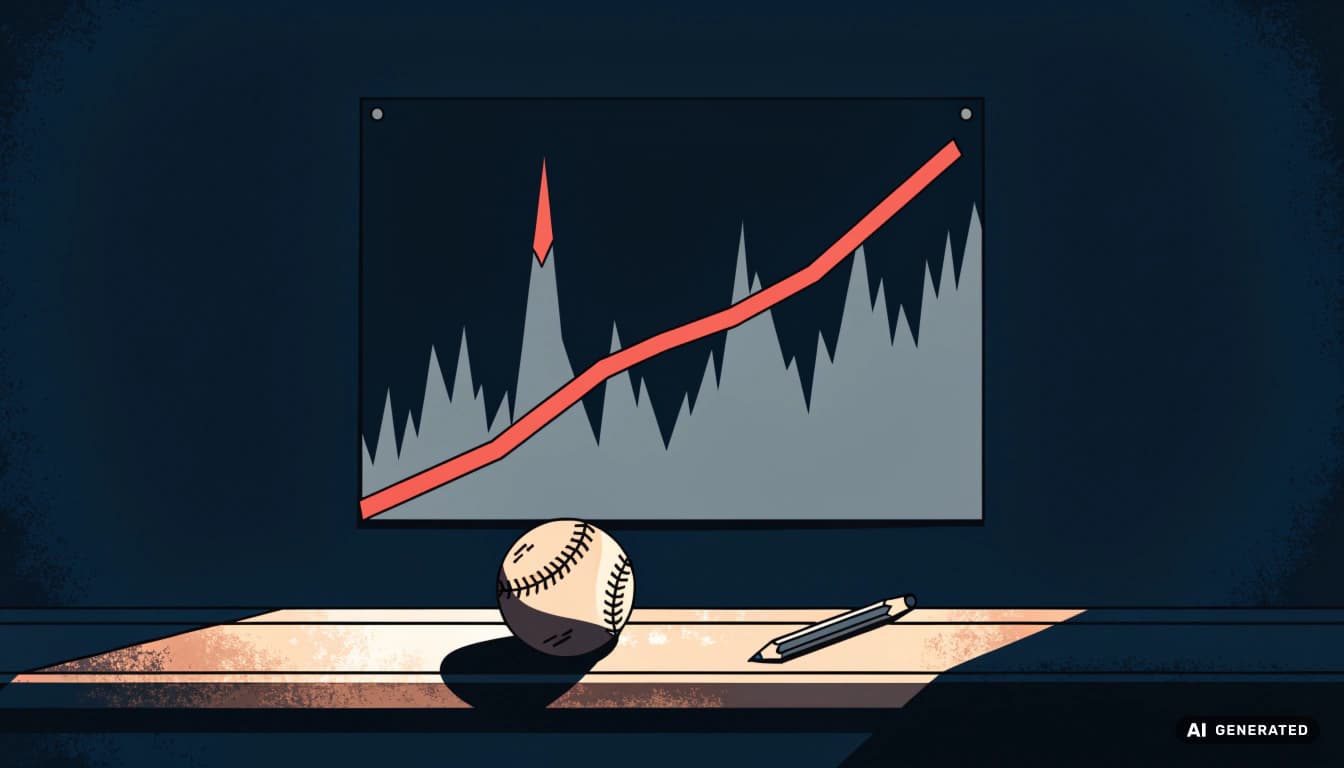
To change this, stop looking at data in the moment. Look at trends instead. You still deal with today's problem today. You just stop grading people on it. Single data points mislead, trends inform.
Nassim Taleb makes the same point in Fooled by Randomness with a dentist who checks his investments all day long. Same portfolio, same decisions. Checked daily, it's up 54% of the time — a coin flip. Checked quarterly, 77%. Checked yearly, 93%. Nothing changed except how often he looked.
When looking at someone's performance, look at what they have done over a 12 month period. Are safety incidents trending up or down? Are shipping costs trending up or down? Not what safety incident happened today or why the heck did this shipment cost 15% more today. Looking at data this way helps people see that what they are doing is helping the company in the long run.
It's simple to do. Just do a running average of three months' data, and use those data points as your trend line.
You're probably thinking: a safety incident today can't wait three months for an average.
A safety incident that happened today definitely needs to be actioned. However, you can act on the event and analyse and judge on the trend.
So you might be wondering what you can do in your operation.
At your next Monday meeting get your people to provide 3 month rolling average data over a 12 month period on the KPI or KRI they are most concerned about changing. This will show the trend. Bear in mind this smooths over, or hides, good things as well. So you act and address things in the moment, good and bad, but analyse and judge using the long-term trends.
If it's shipping costs, have them look at the 3 month averages. Then have them describe the actions they took to drive that number. Good and bad. They'll feel more confident, and they'll also learn what they did that worked, and include that in their SOP. By the way, knowing what didn't work is also important. Your competitors probably don't know what not to do. But you do!
Act on the event. Judge on the trend.
One next step: At your next Monday meeting, pick one number — safety incidents or shipping cost — and have the person who owns it bring the 3-month rolling average over the last 12 months. Then ask what they did to move it. Not what happened yesterday.
Further reading:
- Fooled by Randomness — Nassim Nicholas Taleb (Random House, 2004). [[The dentist and Table 3.1: why a day is noise and a year is signal.]]
- The Signal and the Noise — Nate Silver (Penguin Press, 2012). [[Why single data points mislead, and how to tell what is signal.]]
- Thinking in Bets — Annie Duke (Portfolio, 2018). [[Judge the decision, not the result. The pitcher and your shipping lead, in book form.]]