
Coaching Looks Forward. Therapy Looks Back. You Need to Know the Difference.
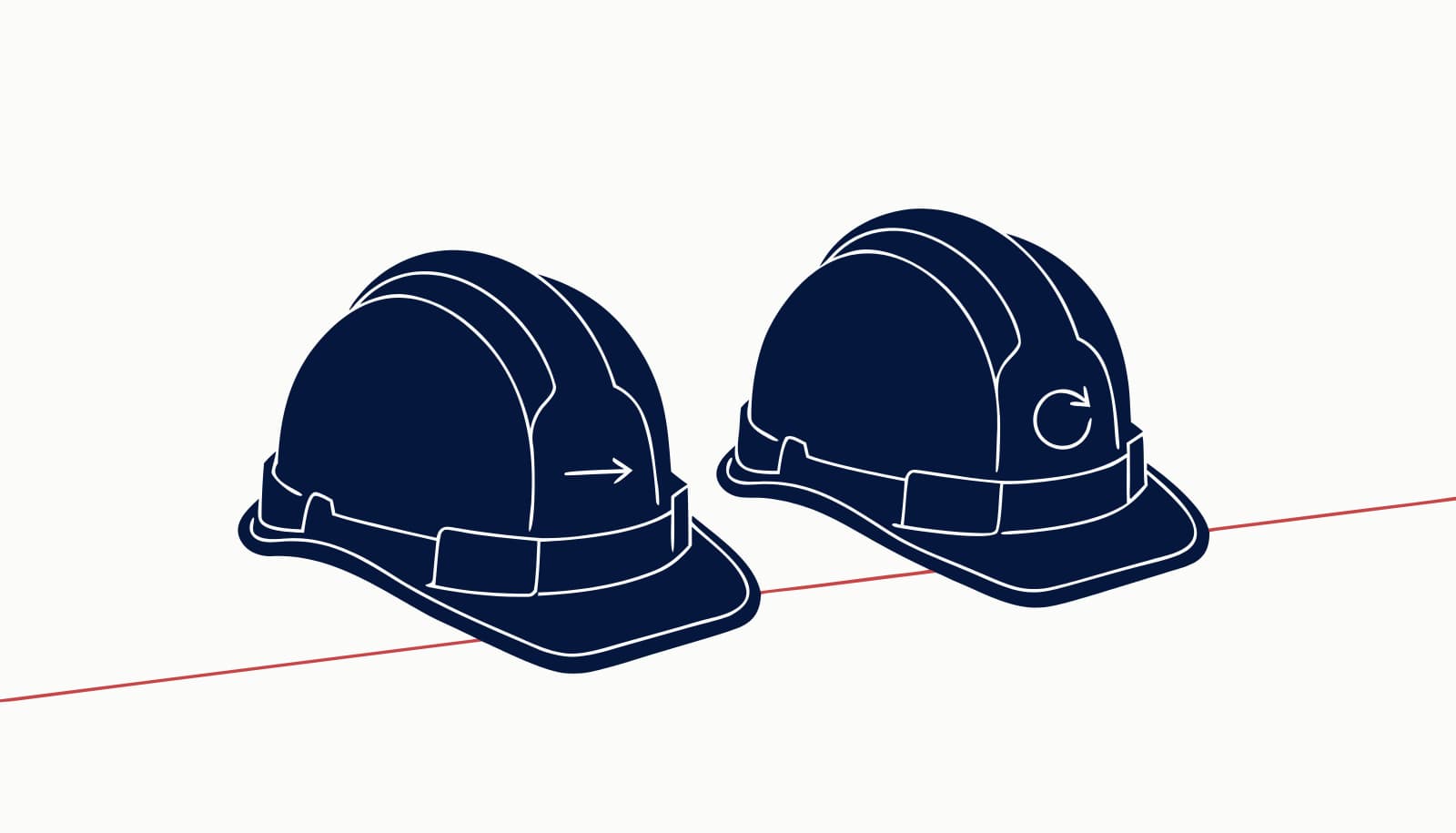
Two hats every operator wears — and the one that gets you in trouble when you confuse them.
The question I keep getting
Every few weeks, someone asks me a version of the same question:
"What's the difference between coaching and therapy?"
It usually comes from an owner or plant manager who's trying to figure out what to do with a struggling employee — or, just as often, trying to figure out whether they themselves need a coach, a therapist, or just a long weekend.
It's a fair question. And the answer matters more than most people realize, because in a 25-to-100-person shop, you wear both hats whether you signed up for them or not. You coach your supervisors on Tuesday morning. By Tuesday afternoon, somebody's in your office because their marriage is falling apart and the hydraulic press is down and they can't think straight. Same person, same office, two completely different conversations.
If you don't know which one you're in, you'll do harm in both.
The simplest distinction that's ever held up for me
I don't remember where I first heard it, but it stuck:
Coaching looks forward. Therapy looks back.
That's it. That's the whole thing.
Neither is better. They're different tools for different problems.
Coaching is for someone who wants to get somewhere they aren't yet. A coach uses models — GROW, "Back to the Future," structured listening — to help the other person see what they want and build a path to get there. The mentee decides the destination. The coach helps them find the route.
Therapy is for someone whose past is sitting on top of their present. Trauma. Loss. Events that already happened and can't be undone. A coach can't fix that. We're not trained for it, and pretending otherwise is how good intentions turn into real damage. Therapists have tools — clinical, evidence-based, regulated — for helping people deal with what was.
Past events can't be changed. But they have to be dealt with. That's therapy's job, not yours.
The complication: you're going to misdiagnose this
Here's where it gets uncomfortable for owner-operators.
When a long-tenured employee starts missing deliveries, snapping at the apprentice, and showing up late — your instinct is to coach. Set a goal. Build a plan. Hold them accountable.
But what if the issue isn't forward? What if their kid just got diagnosed with something serious, or they're six months into a divorce they haven't told anyone about, or they came back from a deployment ten years ago and never really came back?
You can run the cleanest GROW conversation in the world and it won't touch any of that. Worse — you'll frustrate them, frustrate yourself, and conclude they're "not coachable" when the truth is you were using the wrong tool.
The reverse is also true. Sometimes a struggling supervisor doesn't need anyone to dig into their feelings. They need someone to ask, "What does good look like in 90 days, and what's one thing you can do this week to move toward it?" — and then get out of their way.
A story I learned the hard way
Years ago I took on a coaching client who was doing well at work. He'd been stuck at the same level for years and wanted my help to move up. Forward-looking, ambitious, clear goal. Right in my wheelhouse. Coaching, yay. I jumped in.
It didn't take long for the conversation to go somewhere I wasn't expecting. The answers stopped being about his career and started being about how much he hated his wife. He became a different person in front of me — angry, agitated, somewhere I couldn't follow. None of the coaching tools I had were going to touch any of it.
So I stopped. I asked his permission to bring in someone who could actually help.
Here's something I do at the start of every coaching relationship, and you should consider doing it too — whether you're hiring a coach or coaching someone yourself:
"I'll keep everything we discuss confidential. I won't share anything with anyone — even something good — without your prior authorization. The one exception: if you tell me you want to hurt yourself or someone else, I won't keep that confidential. I'll bring in people who are trained to help. Is that okay with you?"
I've never had anyone refuse. In this case, he agreed. His company had excellent therapists on call. He got the help he needed for what was behind him, and we got back to work on what was in front of him. He progressed in his career. Others — qualified others — helped him deal with the rest.
I tell that story for one reason: the moment you realize you're holding the wrong tool, your job is to put it down and find the right person. Not to push harder. Not to "get through to them." Stop, ask permission, and refer.
The question
So how do you tell which conversation you're in — and which hat to put on?
Not perfectly. Not always. But well enough to do less harm and more good.
The mindset shift: two hats, one rule
Here's the rule I work with, and the one I'd offer you:
If the obstacle is in front of them, coach. If the obstacle is behind them, refer.
That's the whole mindset shift. Most operators I know default to coaching because it feels productive and forward-leaning — that's our wiring. But the moment you sense the issue is rooted in something that already happened and can't be unwound, your job changes. You're not the fixer anymore. You're the person who notices, who says something kind, and who points toward someone qualified to help — your EAP, a doctor, a therapist.
That's not weakness. That's not "going soft." That's knowing the limits of your tools, which is exactly what a good operator does on the shop floor every single day. You don't use a torque wrench on a finish carpentry job. Same idea.
The two hats:
- Coach hat: Worn in 1:1s, quarterlies, project debriefs, performance conversations about capability and growth. Your job is to ask, listen, and help the person see their own path.
- Referral hat: Worn the moment something tells you the issue is bigger than the workplace. Your job is to acknowledge, not pry, and to point them toward real help.
You wear the coach hat 95% of the time. The other 5% is where most owner-operators get into trouble — usually by trying harder, longer, with the wrong tool.
The mechanism: GROW on the shop floor
Once you accept that coaching is a forward-looking process where the other person controls the destination, the daily mechanics get a lot easier. Here's how I'd run it in your environment.
The setting: It's Wednesday morning. Your lead hand on the fab line, Mike, has been quietly off for two weeks. Quality is fine. Schedule is fine. But he's not himself. You've already ruled out — through a short, human conversation — that there's something heavier going on at home. He says no, he's just stuck. He wants to be doing more.
That's a coaching conversation. Pull him aside for ten minutes by the coffee station. Use GROW:
- G — Goal. "Mike, when you picture the next quarter going well for you, what does that look like?" Let him answer. Don't fill the silence.
- R — Reality. "Where are you right now, honestly, against that?" This is where you listen. He'll tell you more than you expect.
- O — Options. "What are two or three things you could do — that you control — to close that gap?" He generates the options. Not you.
- W — Way Forward. "Of those, what's the one — at most two — you're going to actually do this week?" Pick one. Write it down. Walk away.
Total time: ten minutes. No PowerPoint. No HR form.
Then — and this is the part most operators skip — next Wednesday, you start with: "How did it go?" Not as a gotcha. As a continuation. That's how a 1:1 turns into a coaching relationship instead of a status check.
The same structure works in your scheduled quarterly reviews. Build the agenda around it: Here's my goal. Here's the reality. Here are the options I'm weighing. Here's the one or two things I'm committing to. Next quarter starts with "How did it go?" Simple. Repeatable. And it puts the drive where it belongs — with the person doing the work.
The bottom line
Coaching and therapy aren't competitors. They're different professions solving different problems on different timelines.
As an owner-operator, you'll never be a therapist, and you shouldn't try. But you can become a genuinely good coach — for your team and, with the right outside coach, for yourself. The two hats aren't a burden. They're a clarifier. The moment you know which one you're wearing, the conversation gets easier and the outcomes get better.
Coaching looks forward. Therapy looks back. Know which one is in front of you, and act accordingly.
That's it. That's the difference.
Ready to Find Your Margin?
References & Further Reading
- Whitmore, John. Coaching for Performance — the canonical text on the GROW model, written by the person who developed it. Still the clearest explanation in print.
- Covey, Stephen R. The 7 Habits of Highly Effective People — Habit 2, "Begin with the End in Mind," is the conceptual root of the "Back to the Future" approach.
- International Coaching Federation (ICF) — coachingfederation.org — the global standards body for the coaching profession; useful if you're evaluating coaches for yourself or your senior team.
- Canadian Mental Health Association (CMHA) — cmha.ca — practical guidance for employers on recognizing when to refer, and how to support employees navigating mental health challenges.
- Your provincial EAP provider — if you have an Employee Assistance Program, know the number, know what it covers, and make sure your supervisors do too. It's the single most useful "referral hat" tool in your kit.
If this resonated, forward it to one operator who's wearing both hats this week and might appreciate the distinction.