
The Calmest Guy in the Room Is Running the Room
When a rush order gets scrapped, your crew reads you in three seconds. Blow up and they stop telling you things, which is how small problems become expensive ones.
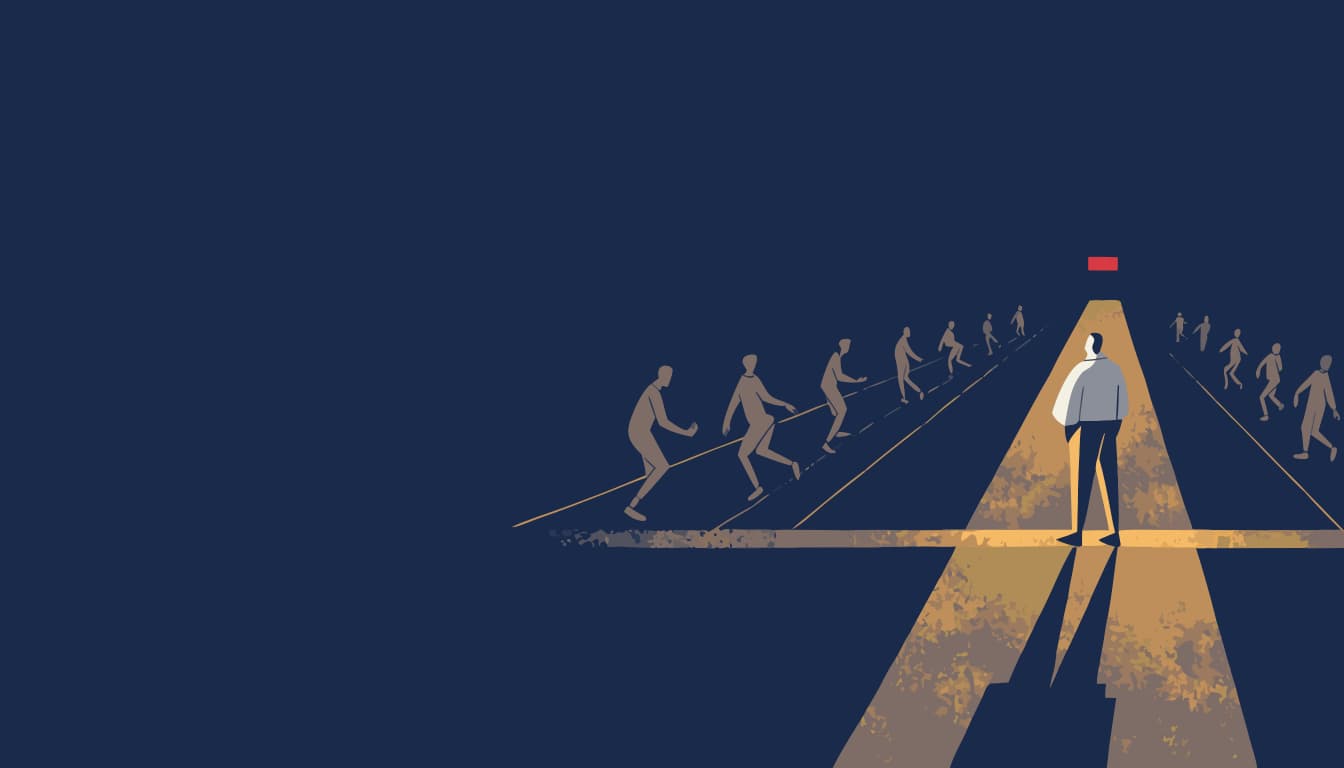
Watch a baseball manager on a bad night. His best pitcher — the guy he's paid millions to get outs — just gave up three runs in an inning.
Does he storm out of the dugout screaming? No. He sends the pitching coach to the mound for a quiet word. Maybe he makes the change. And a day or two later, he sits down with the pitcher and calmly works through what happened, so the guy is better next time.
Now picture the equivalent moment in your shop. A rush order gets scrapped. A crew misses a deadline that costs you a customer. What walks onto the floor — the pitching coach, or the screamer?
I'll be honest about which one I've been. There was no single moment that fixed me. But every time I lashed out, two things happened: I felt lousy, and the person on the other end shut down. Every time. The math wasn't hard.
A friend of mine, Karen Cohen, put it in terms anyone with a dog will recognize. Come into the house wound up and excited, and the dog goes nuts. Come in calm, and the dog is calm.
Your crew is not a dog. But the wiring is the same.
Rochelle Carrington says it more formally: "You can't hide your nervous system from your team. No matter how sharp your strategy or how polished your message, people feel what you're running. If you lead from pressure, your team feels urgency. If you lead from calm, they feel clarity. If you lead from fear, they feel confusion."
That's the reframe. You are not just making decisions. You are broadcasting a state, and the plant floor picks it up before you've said a word. The foreman reads you in the first three seconds of the morning meeting. So does everyone behind him.
And if you're telling yourself that blowing up at least "clears the air" — it doesn't. Scott Young dug through 102 books on the subject and landed here: catharsis is a myth. Expressing anger tends to make you more angry, not less. Count to ten and talk it out instead.
To be clear: passionate is fine. Loud is fine. I want people arguing about the schedule and the scrap rate. Angry is different. Passion invites people in. Anger shuts them down — and then they stop telling you things, which is how small problems become expensive ones. On a plant floor that silence has a price: the scrap nobody flags, the quote nobody questions, the fix nobody brings you.
I know what you're thinking. "Phil, this is a plant, not a yoga retreat. Calm sounds nice until the line is down and the customer is on the phone."
Fair. So let's talk about the least yoga-retreat guy imaginable: Kobe Bryant.
Phil Jackson brought meditation to the Bulls and the Lakers. The players thought he was crazy — they called him the Zen Master and not always kindly. But they trusted him, and they did it. Here's Kobe on Game 7 against Boston: "We were never rattled ever because we were always in the moment, always in the present, always extremely calm… And that comes from being in the meditative state that he would teach and preach from day one."
Never rattled. In a Game 7. That's not softness. That's a competitive weapon.
And it's a weapon that's getting cheaper to acquire, because the competition is fried. The average attention span is now 47 seconds. Athletes who scroll their phones for two hours before bed sleep worse and test worse physically the next day. If you can simply be present in a room in 2026, you're already rarer than you think.
So how do you actually get there? Not by white-knuckling it.
I meditate. Took me a while to say that out loud to other operators, but there it is. The research is boring and consistent: it reduces stress, improves decision-making under pressure, and — this is the important part — it creates a gap between the urge and the action. That gap is where the pitching-coach version of you lives. Eight to ten minutes a day measurably lengthens your attention span, and an eight-week practice cuts reflexive phone-checking by 60 per cent.
Start with a breath pattern I use: 4-8-4. In for four counts, hold for eight, out for four. Do it in the truck before you walk in. Do it before the meeting you're dreading. Nobody has to know.
Then practice calm as a tactic, not just a mood. When somebody fires a passive-aggressive shot at you in a meeting, don't return fire. Jefferson Fisher's move: ask, evenly, "Should I read into that?" or "Did you mean for that to sound rude?" You've forced accountability without raising your voice, and most people back down instantly. That's what calm looks like with its work boots on.
Morgan Freeman has a line about waking up to knee-deep snow: you're not filled with rage — it's just something you've got to cope with. Half of what enrages us at work is snow. Supplier's late. Steel prices moved. Rage burns diesel and moves nothing.
Misty Copeland says resilience isn't about being unbreakable or pretending the pain isn't there — it's moving through it with purpose and holding on to calm long enough to keep going. That's the job. Not feeling nothing. Steadying yourself so the people watching you can steady themselves.
Because they are watching. Always.
The calmest person in the room isn't ignoring the fire. They're the only one thinking clearly enough to put it out.
One next step: This week, before you walk onto the floor each morning, sit in the truck for two minutes and run the 4-8-4 breath five times. Then notice what the first person you talk to reflects back at you.
Further reading:
- Phil Jackson, Eleven Rings: The Soul of Success (Penguin Press, 2013). The story behind why Jackson introduced meditation to some of the most competitive athletes in the world — and why it worked.
- Ryan Holiday, Stillness Is the Key (Portfolio, 2019). A practical case for calm as a performance advantage, drawn from athletes, generals, and executives.
- Chade-Meng Tan, Search Inside Yourself (HarperOne, 2012). The mindfulness programme developed at Google — pragmatic, secular, and built for people who think meditation is for someone else.