
Bad Meetings Aren't a Discipline Problem
The fix isn't better people. It's a better system.
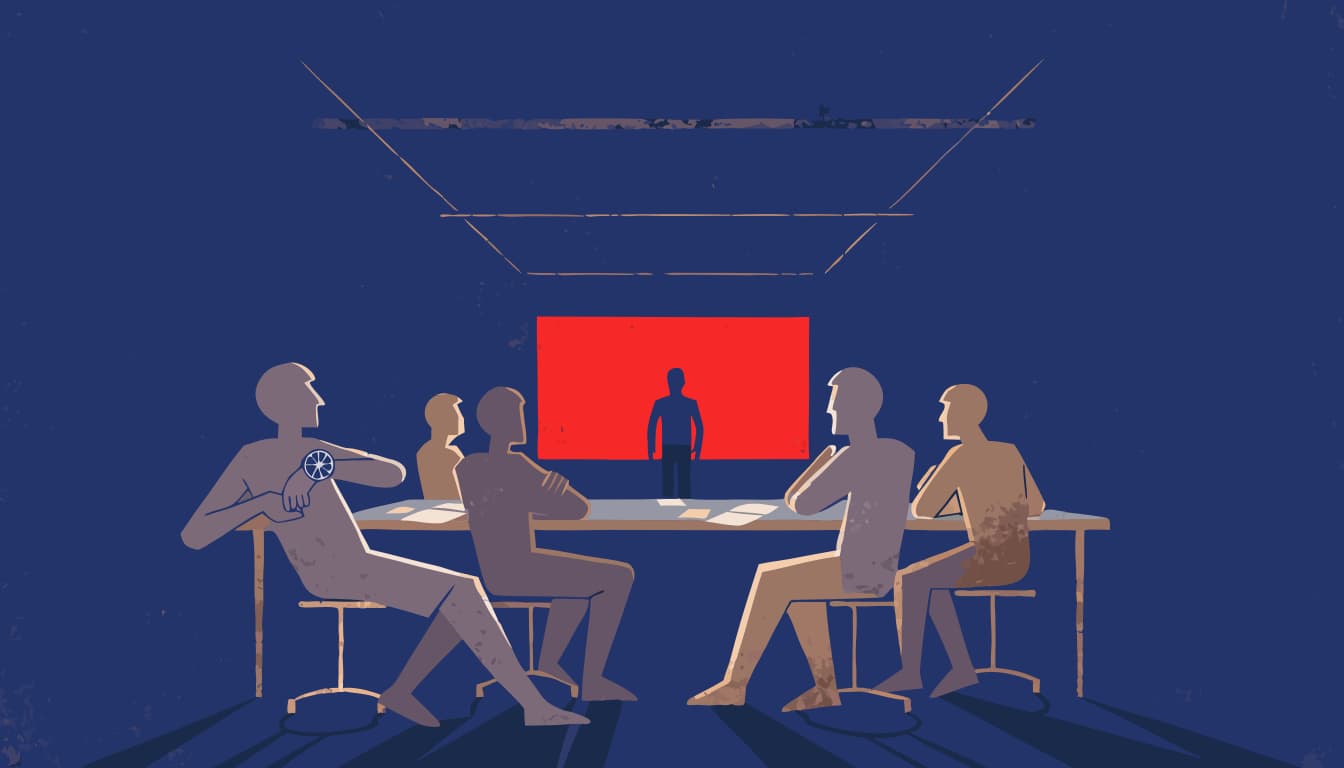
Stop and do the math.
Ten people in your Monday morning meeting. Ninety minutes. At $80 an hour loaded with benefits and overhead — and in most of the shops I work in, that's a conservative number — you're looking at $1,200 out the door before anyone touches a piece of equipment. Before any decisions get made. Before a single action item lands on anyone's desk.
Now run that across every recurring meeting in your operation. The Monday production review. The Tuesday safety stand-up. The Thursday "let's circle back." In a 50-person shop running five or six weekly meetings, you're spending $15,000 to $20,000 a month on meetings.
The question isn't whether that's a lot. The question is: what are you getting for it?
In every company I've worked with — and I've been inside at least a hundred over 25 years in manufacturing, oil field services, and construction — the answer is almost always the same. People show up not knowing what the meeting is for. There's no agenda, or there's one nobody looked at. Topics jump around. Old ground gets relitigated. The meeting ends and within 48 hours, nobody agrees on what was decided or who was supposed to do what.
The typical response from leadership: "We need more discipline in our meetings."
That's the wrong diagnosis.
Bad meetings aren't a discipline problem. They're a system problem.
Discipline assumes the knowledge exists and people are choosing not to apply it. But if you walked out onto your floor right now and asked three different people what your Monday meeting is actually for, what would you hear? If everyone gives you a different answer — or no answer — the problem isn't attitude. It's that you never defined what the meeting was supposed to accomplish.
There's a reason this has been true for decades. In 1976, John Cleese's production company made a training film called Meetings, Bloody Meetings that diagnosed the same failure pattern we still see today. The point wasn't that meetings are inherently painful. The point was that a bad meeting is almost always a design failure, not a people failure. You get what you build for.
I've watched this in manufacturing plants, in O&G service companies, in construction firms. The operations with good meetings didn't get lucky with good people. They built a system.
You're probably thinking: we have agendas. We send them the night before.
Fair. But here's the test: what is the objective of your Monday meeting? Not the topics — the objective. The one-sentence answer to "why are we in this room?"
If you can't write that sentence right now, you don't have a meeting system. You have a recurring calendar event.
An agenda without an objective is just a list of things to talk about. You can spend ninety minutes working through it and walk out with nothing changed.
The system has three parts.
Define the purpose of every recurring meeting. One sentence. "This meeting exists to review last week's production numbers, surface blockers, and confirm priorities for the coming week." Write it down. Put it on every agenda. Read it aloud the first time you run the redesigned meeting. After that, the room holds itself to it — because the team now has a standard to enforce.
This is where something shifts. Once people understand the purpose, they self-regulate. Someone starts going off-topic, a colleague brings them back — not as a reprimand, just as a reminder of how things work here. That's what meeting culture actually looks like. Not someone barking to stay on track. A shared system that makes the right behaviour the obvious behaviour.
Run the agenda with a sequence and time blocks. Order items by importance, not urgency. Assign time based on what each item deserves — not how long people tend to talk. The person running the meeting holds the clock. If an item runs over, you have two choices: cut it short and move on, or explicitly decide as a group to extend it and compress something else. What you don't do is drift until you've run out of time and skipped the last three items — which are often the ones that most needed a decision.
End every meeting with an action list. This is the most important part. Not a recap email. Not "great discussion everyone." A three-column matrix — who does what by when — built live in the room before anyone leaves. Every action gets a name, a task, and a hard date. That list goes out within the hour and gets reviewed at the top of next week's meeting.
Here's the compounding effect: one committed action per week is more than 50 improvements over the course of a year. Most operations I work with are sitting on 200 ideas and executing zero. The meetings aren't the problem. The missing output structure is the problem.
You don't need better people in your meetings. You need a better design for your meetings.
One next step: Before your next Monday meeting, write one sentence: "This meeting exists to..." Send it in the agenda. At the end of the meeting, build the three-column action list — name, task, date — and circulate it before noon. Run that for four weeks and see what changes.
Further reading:
- Death by Meeting — Patrick Lencioni (Jossey-Bass, 2004). The clearest case I've read for why meetings fail structurally — and how a well-designed meeting rhythm changes what a team can execute.
- High Output Management — Andrew Grove (Random House, 1983). Grove's framework for what managers actually produce — and why the meeting is one of their primary tools — is still the most no-nonsense take available.
- The Checklist Manifesto — Atul Gawande (Metropolitan Books, 2009). Written about surgery, but the argument maps directly: skilled people make consistent errors without systems. The operating room and the boardroom have more in common than you'd think.